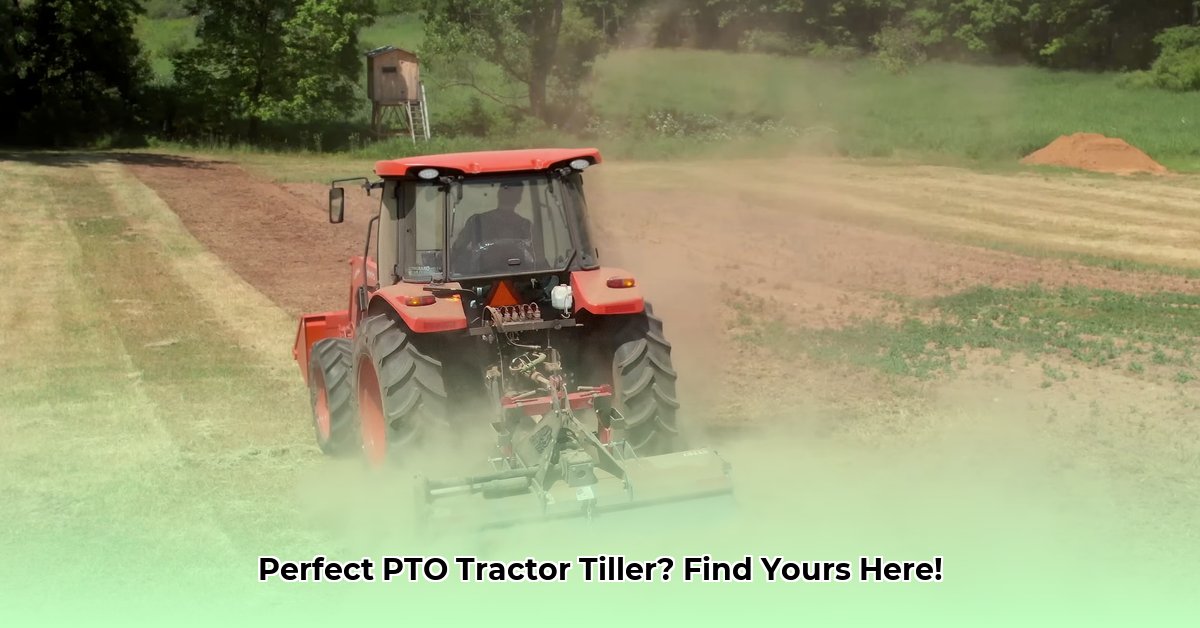
Choosing the right PTO (Power Take-Off) tractor tiller is crucial for efficient farming and maximizing crop yields. This comprehensive guide will walk you through the selection process, from assessing your farm's needs to maintaining your tiller for optimal performance and long-term value. For more detailed information on PTO tillers, check out this helpful resource: PTO Tiller Guide.
Understanding Your Farm's Needs
Before you begin shopping, thoroughly analyze your farm's specific requirements. This foundational step ensures you select a tiller perfectly matched to your operations.
Soil Type: Clay soils require heavy-duty tillers with robust tines, while sandy soils might benefit from lighter models with sweep tines. Rocky soil necessitates tillers with sturdy construction to prevent damage. Do you have any areas with particularly challenging soil conditions? This is critical in choosing appropriate tines and tiller strength.
Acreage: The size of your fields directly impacts the tiller's required width and horsepower. Larger acreages necessitate wider tillers for faster coverage, but this also demands more powerful tractors. What is your total acreage, and what percentage requires tilling? This helps determine the ideal tiller width. Also, how much time can reasonably be dedicated to the tilling process? A larger tiller may save time but could be too expensive for smaller operations.
Tractor Horsepower and PTO Capabilities: Your tractor's PTO horsepower is paramount. Selecting a tiller exceeding your tractor's capacity risks damage to both machines. Consult your tractor's owner’s manual for precise PTO specifications, including horsepower and PTO shaft diameter. The shaft diameter must match the tiller's input shaft. Don't underestimate this vital compatibility check.
Crop Type: Different crops demand various tilling depths. Deep tillage might be necessary for certain crops, while others thrive with shallower tillage. What crops will you primarily plant? This dictates the optimal tillage depth and tine type.
Budget: Establishing a realistic budget prevents overspending. Consider not only the initial purchase price but also ongoing maintenance, repairs, and potential fuel costs. A higher upfront investment in a durable tiller can lead to long-term savings on repairs and replacements.
Key Features to Consider
Several key features differentiate PTO tillers. Understanding these distinctions is vital for making an informed purchase.
Gear-Driven vs. Chain-Driven: Gear-driven tillers offer superior durability and power transmission, making them ideal for challenging soil conditions. They typically have a higher initial cost but offer a longer lifespan. Chain-driven tillers are more affordable but may require more frequent maintenance and have shorter lifespans. What is the balance between initial investment and long-term maintenance costs that best fits your operational needs? This is a critical trade-off that affects overall cost-effectiveness
Tine Types: Different tine types are suited to various soil types:
- L-shaped tines: Best for tough, compacted soils (clay).
- Sweep tines: Ideal for lighter soils and shallower tillage.
- Disk tines: Versatile and suitable for a range of soil types.
Adjustable Skid Controls: These enable precise depth adjustment, creating a consistent seedbed crucial for even germination and optimal crop yields.
Tiller Width: Select a width compatible with your tractor's power and field size. A wider tiller covers more ground per pass but demands more horsepower.
Heavy-Duty vs. Lighter-Duty Construction: Heavy-duty tillers handle rocky soil and challenging terrain better but come at a higher price.
Reverse Rotation: This valuable feature helps break up soil clumps and facilitates better aeration.
Selecting the Right Tiller: A Structured Approach
Follow these steps for a successful tiller selection:
Assess your farm needs: Soil type, acreage, tractor capabilities, crop types, and budget are all crucial factors.
Define your budget: Factor in initial cost, maintenance, and repairs. What is your maximum acceptable expenditure, considering both short-term and long-term implications?
Research Models: Compare different models based on features and specifications (see the comparison table below). What features are most important given the specifics of your farming operation?
Read Reviews: Consult reviews from other farmers to gain valuable insights into real-world performance.
Consult Dealers: Dealers can provide expert advice and help match your needs with specific models.
Test Drive (if possible): Hands-on experience is invaluable before committing to a purchase.
Maintenance and Operation: Ensuring Longevity and Safety
Proper maintenance is crucial for your tiller's lifespan and safe operation.
Lubrication: Regularly lubricate moving parts according to the manufacturer's recommendations. How will you schedule consistent lubrication maintenance to prevent costly repairs?
Tine Inspection: Regularly inspect tines for wear and promptly replace damaged ones. What is your inspection schedule to make sure your tiller is working at peak performance?
Safety Procedures: Always follow manufacturer's safety guidelines. Strict adherence to safety protocols is non-negotiable.
Budget and ROI: The Long-Term Perspective
While the initial investment can seem substantial, efficient tilling leads to improved crop yields and increased profitability, providing a strong return on investment. Proper maintenance minimizes downtime and repair costs, further maximizing your ROI. What is your projected ROI based on potential yield increases and reduced maintenance costs?
Comparing PTO Tiller Types: A Summary Table
| Feature | Gear-Driven | Chain-Driven |
|---|---|---|
| Durability | High | Moderate |
| Maintenance | Less frequent, but more complex | More frequent, simpler |
| Initial Cost | Higher | Lower |
| Power Transmission | More efficient | Less efficient |
| Ideal Soil Types | Heavy clay, compacted soils | Lighter soils, sandy loam |
Conclusion
Choosing the right PTO tiller is a strategic investment. By carefully considering your farm’s unique needs and the tiller's key features, you can select a model that optimizes efficiency, maximizes yields, and contributes to the long-term profitability of your operation. Remember, thorough research and diligent maintenance are key to reaping the rewards of a well-tilled field.